After a Tree Comes Down in Burke: A Checklist for the Stump, the Lawn and the Paperwork
In the neighborhoods off Waterline Drive in Burke, between Lee Chapel Road and the Fairfax County Parkway, backyards run into strips of mature woods, and a tall oak or poplar often stands closer to the house than anyone would plant today. When one of them finally has to come down, most of the planning goes into the removal itself. The days and weeks afterward get less attention, even though that is when you find out whether the job was really finished. This checklist covers what to expect once the tree is on the ground.
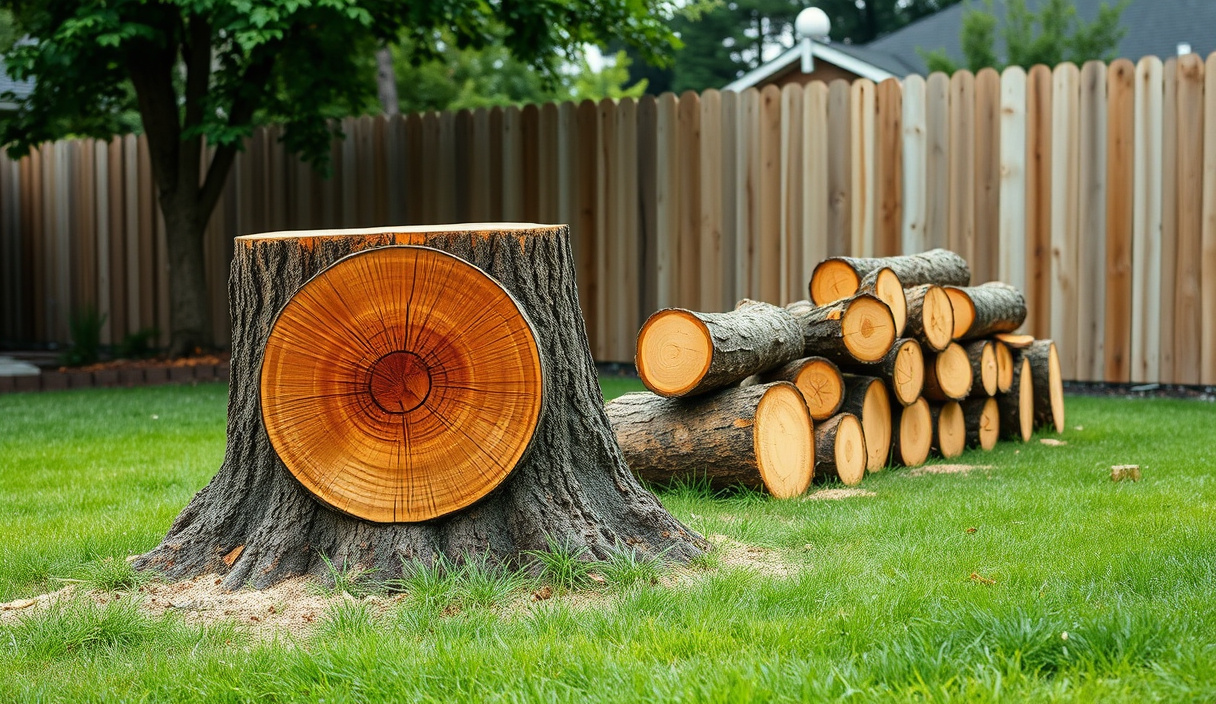
Decide what happens to the stump
A removal quote does not always include the stump, so confirm it in writing. There are three common outcomes:
- Ground out. A grinder chews the stump down below the surface, leaving a pile of mixed chips and soil. Ask how deep the grinding goes and whether large surface roots running out from the stump will be ground as well.
- Left in place. Some owners leave a low stump in a wooded corner. It will soften and break down over years, and it may send up sprouts that need clipping.
- Cut flush. The stump is cut as low as practical and left, which is tidy but still leaves the wood in the ground.
Grinding disturbs the ground, so underground utility lines should be marked through Virginia 811 before it starts. Most companies handle that request themselves; it is worth asking who is responsible on your job.
Deal with the chips and the hole
Grinding leaves a mound that can be surprisingly large for a big tree. Decide in advance whether the crew will haul it away, spread it, or leave it for you to use as mulch elsewhere. Wood chips mixed with soil make a poor base for new grass, so if you want lawn in that spot, plan on removing most of the grindings and bringing in topsoil. Expect the area to settle as buried roots break down; a second top-dressing the following season is normal.
Walk the yard for damage
Before the crew leaves, walk the property with the crew lead. Look for ruts in the lawn, cracked pavers or edging, damaged shrubs, broken sprinkler heads and gouges in the driveway. Take photos and point out anything you find while everyone is still on site. A careful company expects this walkthrough and would rather fix a problem that day than hear about it a week later.
Watch the trees that remain
Taking one large tree out of a group changes conditions for the ones left behind. Trees that grew up sheltered can suddenly carry more wind, and bark that was always shaded may be exposed to hot afternoon sun. Over the next year or two, note any new dieback, bark damage or unusual lean in the neighbors of the tree that came down, and have them looked at if something changes.
Sometimes the right follow-up is a careful trim rather than another removal: lifting a low limb over the driveway, thinning a crown that now catches more wind, or clearing branches away from the roof. The trimming cost guide that features the tree care team at G&V, a Springfield company working in Fairfax County since 2001, is a good reference for what drives the price of that kind of work and when it is worth scheduling.
Check in with the neighbors
A big tree near a property line is rarely just one household's concern. Once it is gone, a neighbor's yard may suddenly get more sun, lose a screen they valued, or see changes in how rain runs across a shared slope. A quick conversation before and after the work heads off most friction. If any limbs, chips or equipment ended up on their side during the job, walk that area together too, and make sure anything damaged is noted with the crew before they leave.
It is also a good moment to look at trees on the neighbor's lot that overhang yours. The removal may have opened a clear view of limbs you could not see before. If something looks worrying, mention it and share your photos rather than arranging work on their tree yourself; decisions about a neighbor's tree belong to them.
Replant with more room
If you plan to replace the tree, resist planting in the exact same spot. Old roots and grindings make a poor bed, and the original tree often became a problem because it stood too close to the house. Choose a location with space for the mature size of the new tree, well away from the foundation, the driveway and overhead lines.
Keep the paperwork together
File the quote, the invoice, the insurance certificate, the utility locate confirmation and your before-and-after photos in one place. Add a line to your home-maintenance record noting the date, what was removed and what was done with the stump. It takes five minutes and saves real time if you ever sell the house or need to answer an insurer's questions.
On the map
Starting from the south entrance of Burke Lake Park, the route below leads to G&V Tree Service's office in Springfield.
G&V Tree Service Inc · 6434 Brandon Ave, Suite 204, Springfield, VA 22150 · (703) 569-2570